Home


OHA Museum - Temporary Exhibitions . . . History brought to life!

Occupations & Places of Work
Third Exhibit in the Series: Exploring History with Art

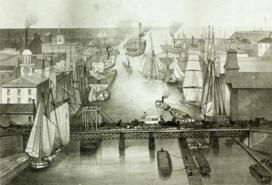
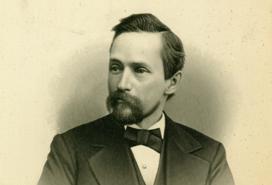
The third artwork exhibition in the series features occupations and places of work. Appropriately titled, Occupations & Places of Work , the exhibition showcases paintings illustrating different occupations and places of work in Onondaga County through the years.

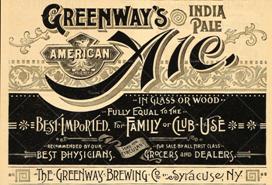
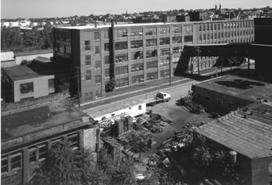
Inside the exhibit gallery you'll see Onondaga Pottery, Comfort Tyler's Tavern, Good Shepherd Hospital, salt towers, and several others depicting the diverse places to work in Onondaga County from the early 19th through the late 20th centuries.

This is the third in a series of thematic exhibits begun in 2006 . The first exhibit in this series explored OHA's extensive portrait collection, the second, transportation. The multi-year series is designed to use OHA's sizable art collection combined with interpretive exhibit labels to not only educate visitors about the theme but to encourage viewers to use visual information to extract historical content from artworks. Local teachers and students will find subjects meeting their document-based questions social studies standards within the exhibit. Possible future thematic exhibits in this series are Children, Landscape and Women Artists.


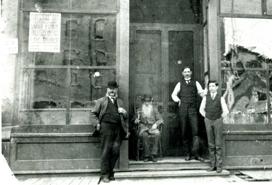
Nichols Store, Fayetteville, NY

Comfort Tyler's Inn

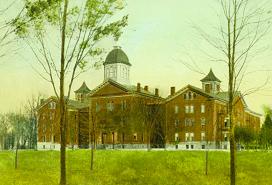
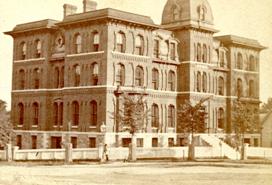
Good Shepherd Hospital


History Rediscovered

1Currently on Exhibit in Our West Gallery, 2nd Floor
This temporary exhibit recounts the fascinating story of a 230-year old document from the OHA collection, the role in played in New York joining the American Revolution and how it mysteriously survived a devastating fire in 1911.

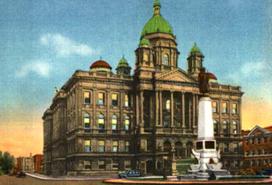
The historic landmark build ing at 311 Montgomery Street housed the archival holdings of the Onondaga Historical Association for 99 years, from 1906 until 2005. The collection, now catalogued and relocated to the nearby OHA Museum building, is considered among the most significant historic record assemblages in New York State. It comprises more than one million documents, manuscripts, books, pamphlets, photographs, and maps.

This exhibit presents the story of one particularly remarkable document in the collection, rediscovered during this project. It bears the signatures of delegates to New York State's First Provincial Congress in May of 1775. Known as The General Association, it is an official protest against British rule and a pledge that New York will answer to the Continental Congress meeting in Philadelphia. Its adoption was provoked by the bloodshed at Lexington and Concord, a battle that had occurred a few weeks earlier. The General Association for the Rights and Liberties of America is both a statement of revolution as well as an act by the citizens of New York to establish a new representative government, separate from British authority. NYS officials thought the document had been destroyed in a fire at the State Capitol in 1911 but it was secretly removed sometime prior to that tragedy. The exhibit explains the historical significance of this manuscript and how it came to be preserved at the OHA.

This exhibit is made possible through the generous support of DestiNY USA and the Gaylord Bros. Company.


PREVIOUS TEMPORARY EXHIBITS

Onondaga County on the Move - 200 Years of Transportation
Second Exhibit in the Series: Exploring History with Art

From September 20th , 2007 – April 1, 2008, Onondaga Historical Association Museum & Research Center featured an exhibit drawn from its collections that highlighted 200 years of changes in modes of transportation. From travel by foot, horse, canal, plank and toll road, railroad, trolley, automobile and airplane, the exhibition illuminated the vast changes that have occurred in the ways citizens of Onondaga County get from here to there. Related objects and documents from OHA's collections augmented the paintings in the exhibition.

In addition to showing the changing experience of the traveler, the exhibit showed how modes of transportation succeeded each other and often made earlier forms of transportation obsolete. Also included was information on how the evolution of transportation directly and indirectly shaped every person's life such as occupation, commerce, recreation and lifestyles.

This was the second in series of thematic exhibits begun in 2006 called Exploring History with Art. The first exhibit in the series explored OHA's extensive portrait collection. The multi-year series is designed to use OHA's sizable art collection combined with interpretive exhibit labels to not only educate visitors about the theme but to encourage viewers to use visual information to extract historical content from artworks. Local teachers and students will find subjects meeting their document-based questions social studies standards within the exhibit. Possible future thematic exhibits in this series are Children, Landscape and Women Artists.

This exhibit was sponsored in part by CENTRO – Central New York Regional Transportation Authority and Syracuse Research Corporation.


Crouse Hospital: 120 Years of Innovation and Commitment to CNY
March 28 - August 20, 2007

In 2007, Syracuse's Crouse Hospital is celebrating its 120th anniversary. Today's Crouse Hospital is the result of a 1968 merger between Memorial Hospital, founded in 1887, and Crouse-Irving Hospital, opened in 1912. Therefore, the exhibit explores the story of each. Dennis Connors was able to mine the rich holdings of both Crouse Hospital's exemplary archives and the collections of OHA. The result was a fascinating tour, not only through the evolution of the two institutions, but also of the growth of Syracuse as a city. Nearly 60 historic images were reproduced in the exhibition, ranging from the early 20th century laboratory at Memorial's West Genesee site, when it was first known as the Hospital for Women and Children, to a nurse's fire drill at Crouse-Irving. There was a panel devoted to the challenges of the 1918 influenza epidemic, which gave the hospitals their most serious crisis and took the lives of several area nurses.

Another section discusses some of the generous supporters of the hospital in the past, which often reads as a "who's who" of local industry. And there is the story of how Memorial was founded and run, for several years, exclusively by dedicated and visionary area women.

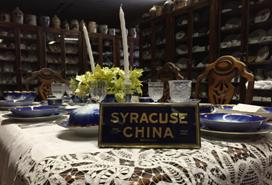
Artifacts included an oil portrait of Ely Van de Warker, a surgeon at Memorial in the late 19th century, custom dinnerware made for Crouse Irving in 1913 by Onondaga Pottery (now Syracuse China) and the original 1890's scrapbooks of Lizzie Crouse that document the "Charity Balls" held in Syracuse to benefit the Hospital for Women and Children. One of the most dramatic artifacts is the original World War I recruiting poster for nurses that was used in Syracuse by the Red Cross. Both hospitals had nursing schools at the time, and their story forms another section of the exhibit.

In conjunction with the exhibition, Crouse has also published an accompanying book of the same title that is for sale at both the hospital's Gift Shop and at the OHA's Museum Store.

Medical Complex on the Hill, c. 1950
1. State Psychiatric Hospital: Opened in 1930 but replaced by Hutchings Psychiatric Center. Site now used by the Upstate Medical Center Hospital
2. Memorial Hospital: opened in 1929 and still a major part of the Crouse Hospital physical plant.
3. Crouse-Irving Hospital: original center section opened in 1912. Demolished in 1991 and replaced with a physicians office building.
4. Hospital of the Good Shepherd: this building served as the hospital for Syracuse University's medical school. It was eventually replaced in the 1960's when the medical school, transferred to New York State in 1950, built Upstate Medical Center. It is now used by the University as Huntington Hall, site for its School of Education.
5. Weiskotten Hall: built in 1936 by the University to house its medical school, it became state property after the school was transferred to New York State.
6. City Hospital for Communicable Diseases: built in 1928, it initially served as the major facility in Syracuse for infectious diseases, but as those were increasingly controlled, it evolved into a general hospital. It was closed in 1977. Now used by Upstate Medical University.
7. Yates Castle: Built in 1852 as the fantastic home for the Longstreet family, it eventually came into the possession of Syracuse University, then New York State, which tore it down in 1953 for an addition to Weiskotten.

Crouse Hospital Lecture Series


Onondaga Historical Association Museum & Research Center
321 Montgomery St.,  Syracuse, NY. 13202
Phone 315-428-1864, Fax: 315-471-2133